Buy it Nice, or Buy it Twice.
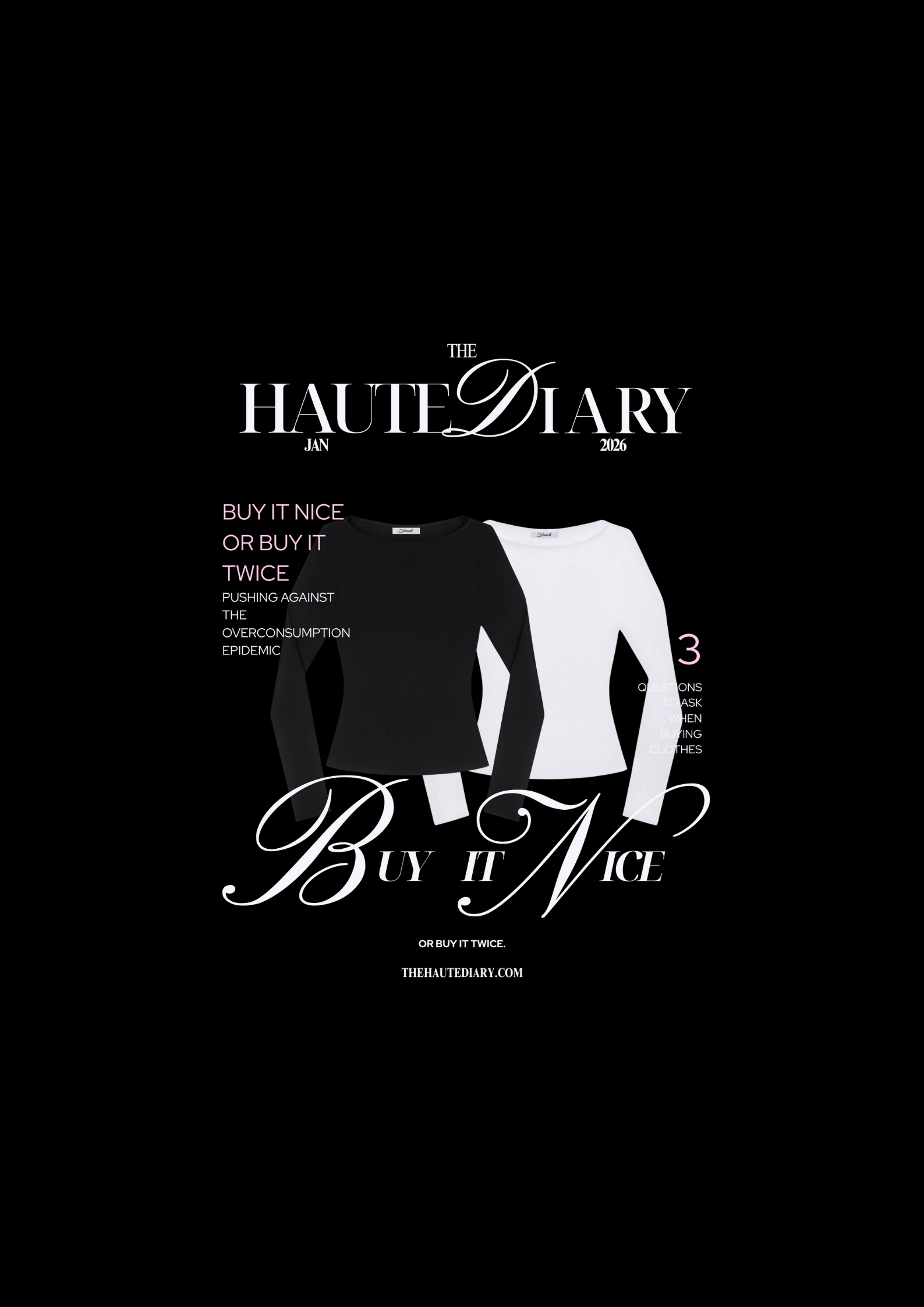
There is a quiet shift happening in fashion. The kind that shows up in how people shop, how often they shop, and what they are finally tired of tolerating.
For years, overconsumption thrived on speed. Microtrends rotated every two weeks, hauls became content and clothing stopped being personal. Now, however, people are becoming exhausted.
Overconsumption and it’s Downfall
Fast fashion promised accessibility, but in return gave inconsistency. Inconsistency in sizing, and more importantly quality. Loose seams. Warped knits. Fabrics that look tired after two washes. Closets full of clothes, yet nothing that actually feels good to wear. The irony is very stark here: The more people bought, the less satisfied they became.
The return of discernment
Buying it nice requires a level of discernment that shopping fast fashion fails to require.
It means asking real questions before purchasing.
Does this garment hold its shape?
Does the fabric age well?
Would I still wear this if no one saw it online?
Does this reflect my actual life, or a version I am trying to perform?
Discernment is uncomfortable because it forces restraint. It means making informed decisions when it comes to fashion because you understand that not every cute item needs to be purchased. It means accepting that building a wardrobe takes time.
Why “buy it twice” costs more than money
Buying cheap is rarely cheap. It costs time spent replacing items. It costs mental energy managing clutter. It costs confidence when nothing fits right or holds up. It costs identity when your wardrobe feels disconnected from who you actually are.
Buying it twice also creates a quiet cycle of dissatisfaction. You keep searching for the version that should have existed the first time. The better coat. The sturdier bag. The top that finally drapes the way it promised.
At some point, people realize they are not saving money. They are postponing quality.
Investment dressing is not elitist. It is strategic.
There is a misconception that buying quality is about status. It is not. It is about reducing friction in your life.
A well-made coat eliminates the need for five mediocre ones. A reliable pair of shoes means you stop planning outfits around discomfort. A wardrobe built on intention frees up mental space. You spend less time scrolling, returning, regretting.
Investment dressing is not about perfection. It is about reliability.
And reliability is the new luxury.
Style that lasts does not chase relevance
When you buy it nice, you stop dressing for immediacy, and your wardrobe begins to tell a consistent story. This is why the most compelling wardrobes are the most coherent, consistent, and identifying. They feel lived-in, in accordance with their specific lifestyle.
In 2026, taste is less about novelty and more about curation.
The future of fashion is slower, sharper, and more honest
Overconsumption thrived on convincing people they were never done. That they needed that new “It-girl top” of the season.
This new era suggests the opposite. You are allowed to stop. You are allowed to be selective. You are allowed to own fewer things and expect more from them.