Why Are We Still Borrowing the 90s Instead of Owning the 2020s?
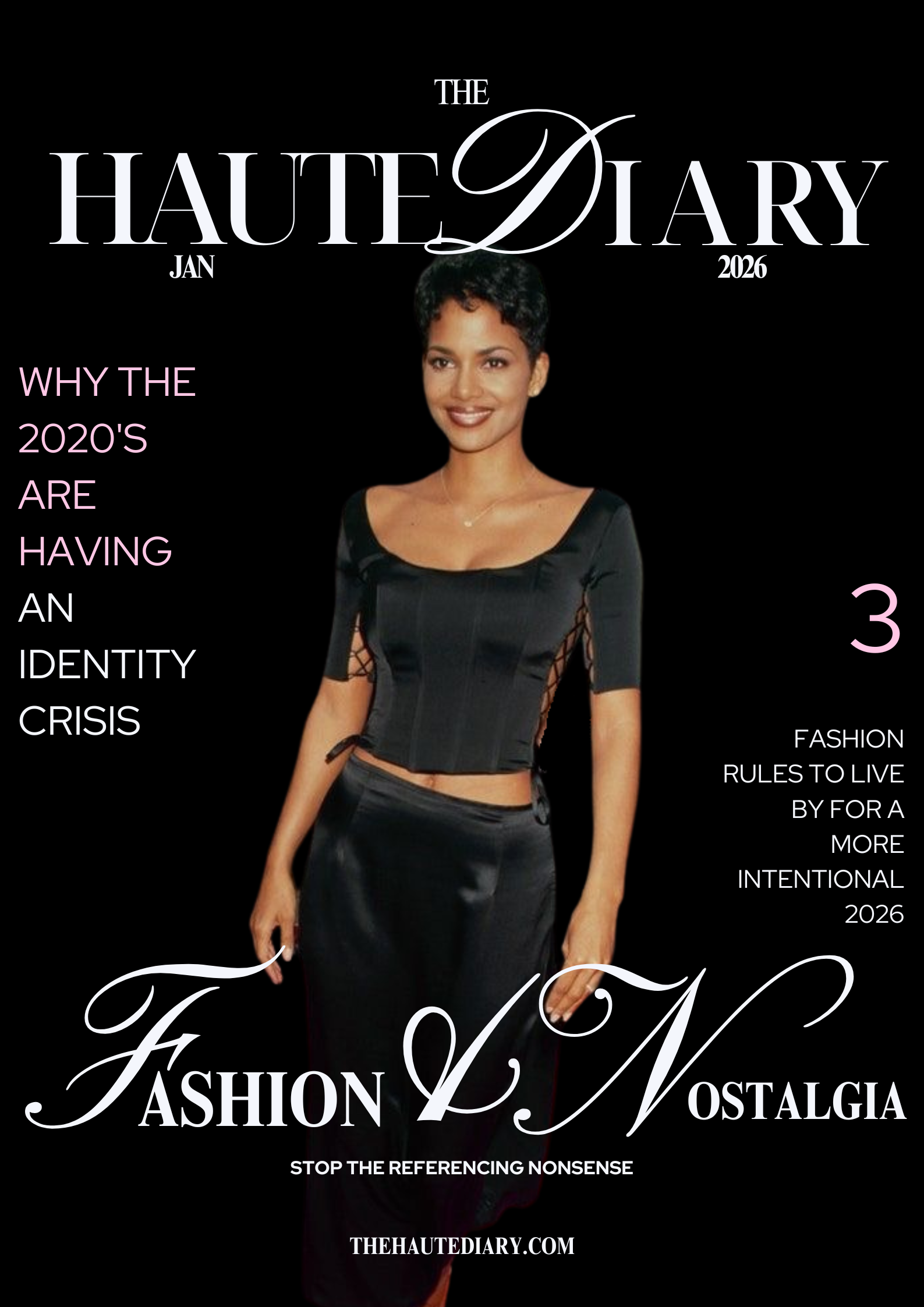
People love the 90s because it was a decade where originality ran free. Things were not forced, self conscious, media trained, and most importantly, people were not trying to be iconic. They just were.
The 90s did not feel like a reference to anything else. It felt like people were living in real time, dressing intuitively, creating without constantly asking, “How will this be perceived?” Designers, musicians, models, and everyday people were shaping culture without knowing they were shaping culture, which is why it feels so magnetic now.
The same goes for the early 2000s. Messy, experimental, sometimes ugly, sometimes brilliant. But all in all, unmistakably its own.
Fast forward to now, the 2020s are obsessed with the past. We recycle the same references over and over: 90s minimalism, Y2K excess, Archive obsession. We call it “paying homage,” but at some point homage turns into straight up copying. Hiding behind decades that already did the hard work of being original.
You could see this clearly at New York Fashion Week, Fall 2025, when Calvin Klein showed a collection that immediately got labeled “the return of the 90s.” People were thrilled. Nostalgia sells and familiarity feels safe.
But here is the uncomfortable question we are not asking enough: Why are we not trying to make the 2020s our decade?
Why is the highest compliment a collection can receive that it reminds us of a past era or cultural moment? Why does originality now feel risky instead of necessary? When everything is a reference, nothing is trailblazing.
If someone looks back at the 2020s twenty years from now, what will they say defined us? Will they say this was the era where everyone curated hyper specific aesthetics instead of building new ones? Where creativity became more about mood boards than movements?
Or maybe I am wrong. Maybe there are people doing something truly unprecedented right now. Designers, creatives, artists who are not chasing validation through nostalgia, but actually pushing culture forward in real time.
If that is the case, we need to talk about them more. Because decades become iconic when people stop looking backward and start making choices that feel risky, personal, and unrepeatable.
The 90s were not trying to be legendary, they just were honest. The real question is, are we brave enough to do the same?